Richard Frederic Bertossa
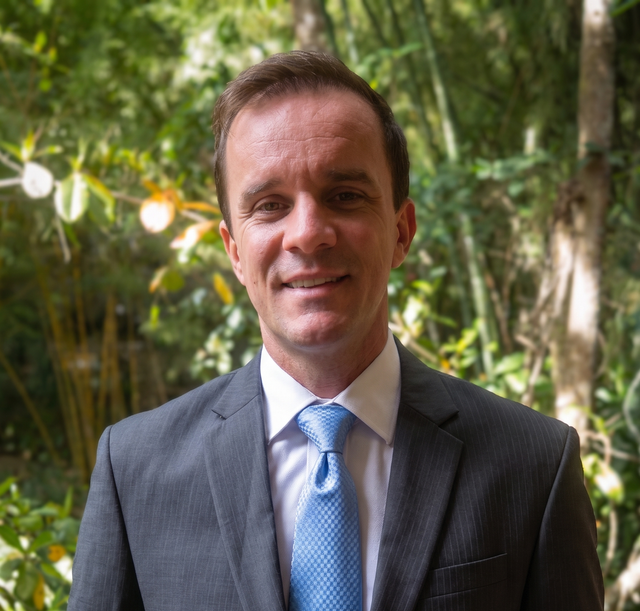
Author. Entrepreneur. Father. Founder of the Geneva Institute for ASI Resilience.
Three decades as an international entrepreneur across four continents. Lived in thirteen countries, six languages, from Vienna and Wall Street through China, Cambodia and Taiwan to his current home bases between the Colombian Andes, the Salzburg mountains, Isla Margarita and Siem Reap. Out of this experience, Richard works on strategies that hold up in any scenario — for families, entrepreneurs, and the next generation.
About
Born in Vienna, independent early — at fourteen traveling alone through Austria, at eighteen to the USA, at nineteen overland to Pakistan.
At twenty-five, member of the Austrian Federal Chancellery's Data Protection Council. First contact with artificial intelligence twenty-two years ago, at AIM Software, a Viennese financial middleware company that was already working with neural networks at the time. Richard ran their US sales out of Wall Street, with Standard & Poor's and Bloomberg as key data partners. Co-founder of one of Austria's first internet companies before the dot-com bust. Built a manufacturing operation in China — first a chemical plant with its own mechanical engineering, then a machine factory and a chemical mixing facility, producing on-site in Asia. An Istanbul office with a partner. An international consulting practice spanning from Australia to Dubai. Six languages — German, English and Spanish active daily, plus French, Portuguese, Mandarin. English rebuilt autodidactically, driven by the Wall Street years.
Austrian-Swiss dual citizen, citizen of the city of Geneva. Lived in thirteen countries and worked across four continents. A father who raised his children across continents — the children as fellow travelers through the international stations, with his own educational model.
Today Richard lives multi-locally, with home bases in the Colombian Andes, the Salzburg mountains, on Isla Margarita, in Siem Reap and in Dubai. In April 2026 he founded the Geneva Institute for ASI Resilience as the institutional response to the urgency described in his book Freedom After Superintelligence. There he works philosophically on the questions of the transition phase — identity, responsibility, and preparation.
As a Father
The children are not an appendix to his travels — they are fellow travelers. They grew up multi-locally, at home in several countries at once, with stations in Colombia, the United States, Taiwan, Brazil, the Philippines, Indonesia, and the Emirates. Austria remains a fixed anchor — the grandmother lives there, the children went to school there, and an apartment in Salzburg is kept to this day. Switzerland holds the paternal roots — that is where the Geneva Institute is based, and where the children have friends.
The educational model is built around this reality. Homeschooling as the foundation, complemented by local schools at locations with cultural depth. Languages are not taught but lived — German, English, Spanish and Portuguese, plus others depending on the location. Sports, physical independence, and early exposure to unfamiliar systems are mandatory.
Behind this model lies a philosophical conviction. A generation growing up in a transition phase — where the world of the parents and the world of the children will no longer be the same — needs competence, not protection. Competence in languages, in geographies, in bureaucracies, in relationships. Preparation, not preservation.
This philosophy of upbringing is a central motif of the book Freedom After Superintelligence, where it is concretely developed.

In Venezuela he took on the secret police to get a friend out — a friend who had vanished over a rental dispute. A hundred newspaper articles, a publicized phone number, kept going until the man was released. Then he realized: the same apparatus could come for him next. He got his family out through fifteen roadblocks; at one of them a soldier photographed his passport and sent it to Caracas, just before Christmas. That night the sentence that now carries his entire work became clear to him: Without an exit option, you can be coerced.
More of this in Freedom Tests →Books
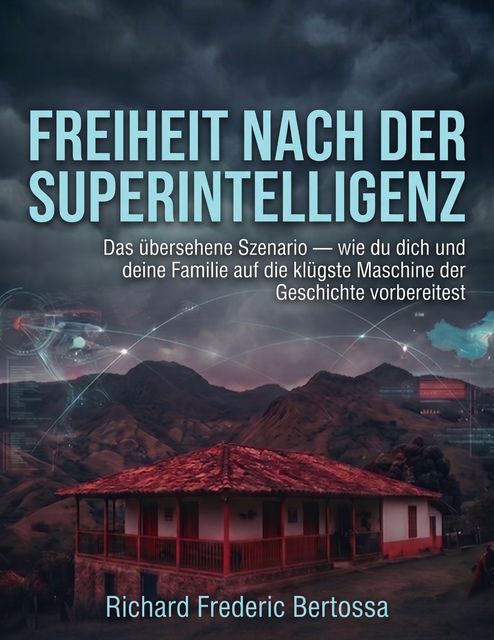
Freedom After Superintelligence
The overlooked scenario — how to prepare yourself and your family for the smartest machine in history.
The people building AI openly warn of the possibility of extinction. Sam Altman, Mark Zuckerberg and Peter Thiel have long since arranged bunkers, passports, and escape plans for themselves. What these people do privately is missing from every family in the world: a systematic preparation strategy that holds up under any scenario — even if the optimists are right. Richard calls it the 13th scenario, the blind spot that AI experts don't follow through to its conclusion.
The book delivers both: a falsification framework you can use to test which AGI prediction holds up, and five building blocks — geography, mobility, speed, mindset, spiritual root — that work in any future.
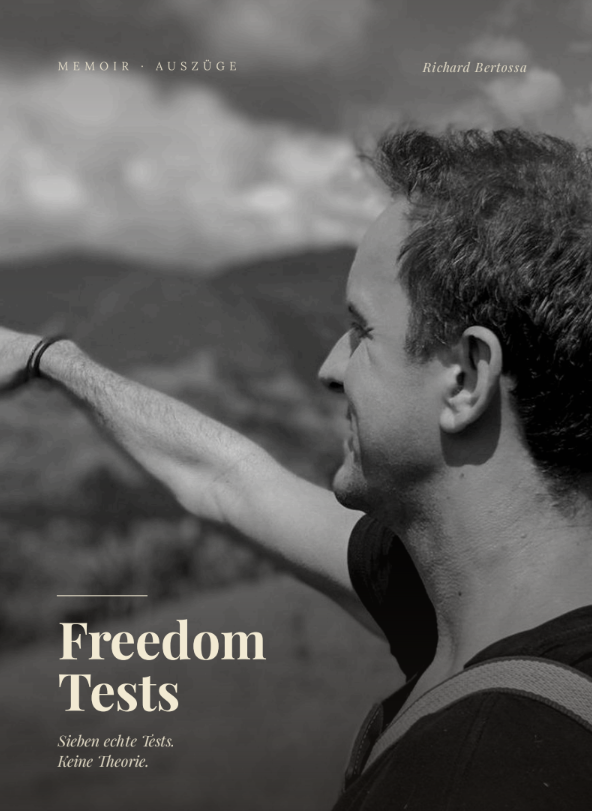
Freedom Tests
A report from three decades between systems.
A report — not a manual. What happens when you stop letting systems intimidate you and start setting up your own chessboard. Stories of authorities, courts and borders, from Vienna to Colombia, from Wall Street to Cambodia. For entrepreneurs and parents who sense that their options are narrowing.
A reading sample is available. Anyone who wants a look can read it directly. The complete beta version is available on request.
Geneva Institute for ASI Resilience
Founded in April 2026 as the institutional response to the urgency described in the book Freedom After Superintelligence. The Institute works on strategies for families and entrepreneurs that hold up under any scenario.
Consulting and Workshops
Richard advises entrepreneurs and families on building international structures: location, mobility, bureaucracy, banking, family architecture. From three decades of lived practice across four continents.
Contact
For inquiries about consulting, workshops, talks or media.
Response time typically within 48 hours.